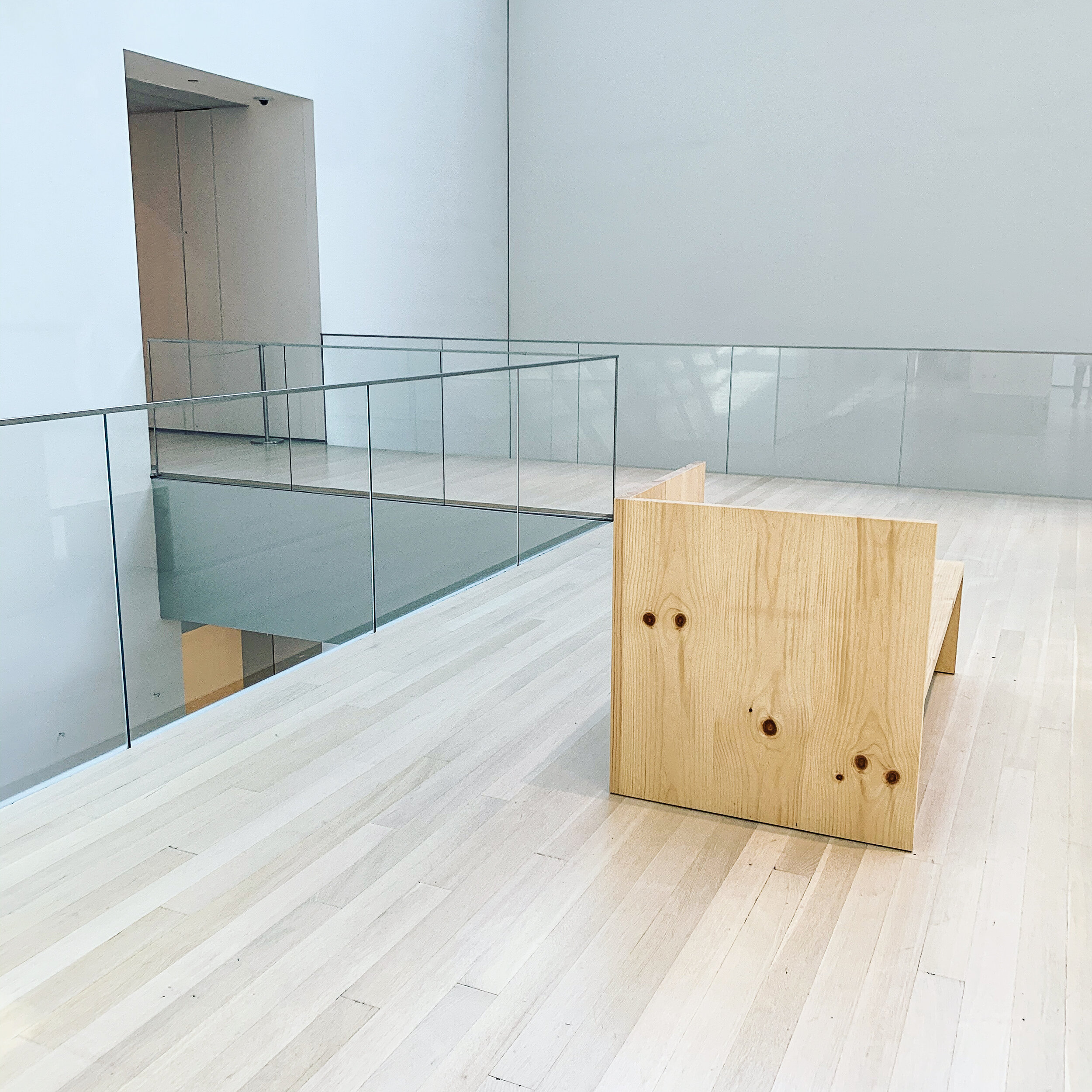
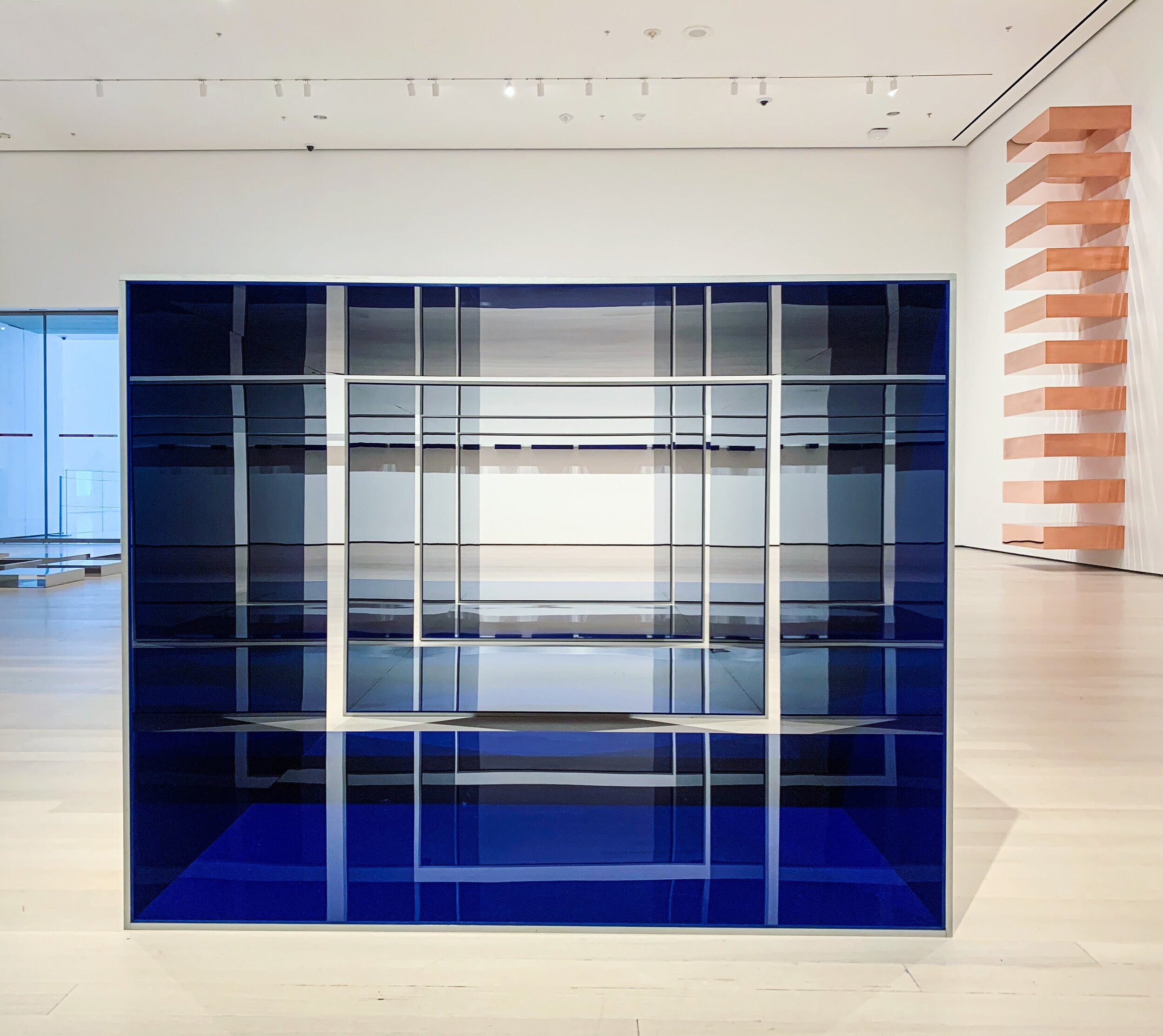
The building itself is worth a visit. I loved the 2004 design by Japan’s Yoshio Taniguchi. The Keio University and Harvard School of Design-educated Taniguchi got his training working with the likes of Walter Gropius and Kenzo Tange, one of the prominent modernist architects in Japan, and, later on, Isamu Noguchi. After opening his own studio, he became known for museum projects, including the Nagano Prefectural Museum, the Marugame Genichiro Inokuma Museum of Contemporary Art, the Toyota Municipal Museum of Art, and the Gallery of the Hōryū-ji Treasures at the Tokyo National Museum. In 1997, Taniguchi won a competition to redesign the Museum of Modern Art, beating out several architecture powerhouses such as Rem Koolhaas, Jacques Herzog and Pierre de Meuron. MoMA, his first project outside Japan, let the artwork breathe by expanding the exhibition space, adding skylights to the galleries and offering visitors lots of unexpected lookout points that allowed them to experience the art and the space in a new light.
In 2019, MoMA morphed again, this time based on the work of Diller Scofidio + Renfro in collaboration with Gensler. The renovated space includes an additional 165,000 square feet of gallery space and it is to the architects’ credit that the design, in many ways, disappears in favor of a seamless experience, letting guests focus on the art without noticing that they are moving between multiple buildings. The expanded space gives MoMA the ability to showcase a much broader range of art and visitors have a chance to learn about a more diverse set of artists.
In the summer, grab a book and ice cream and enjoy the outdoor sculpture garden. It is lovely.
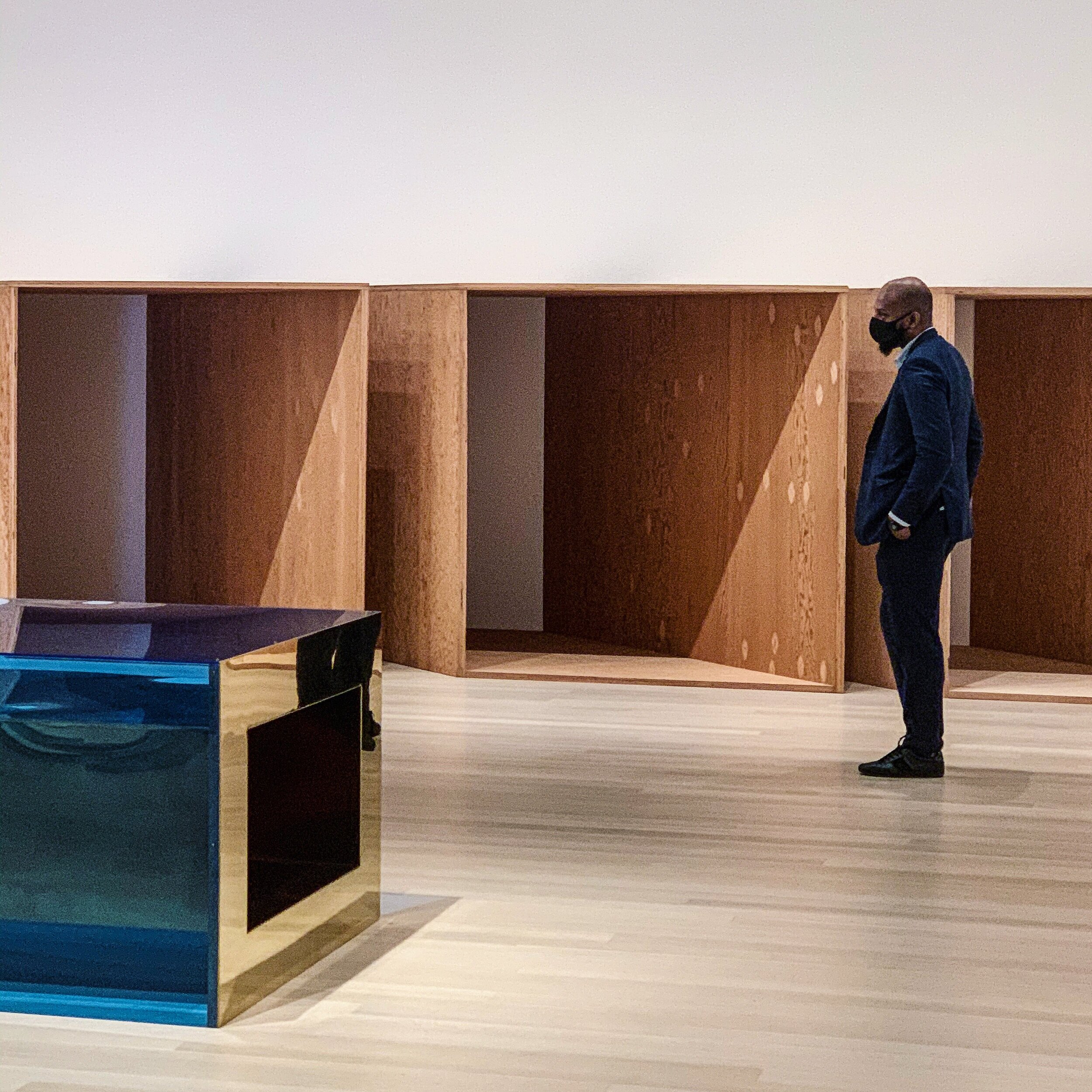
DONALD JUDD’S STREAMLINED ART